We fish it silver, at sea.
The fish worth catching is the one still coming in from the Pacific, before it enters the river: silver, hard and at full strength. That is why we go out to sea rather than upriver.
Chinook salmon on the La Araucanía coast: size, season, the Sernapesca quota, and why it is kept rather than released.
The species
It is the largest salmon in the Pacific, and every summer it runs from the sea into these rivers. A running fish weighs between fifteen and twenty kilos, and the species gives a good deal more than that. When it takes the lure with the sea still in its body, nothing in southern Chile fights like it.
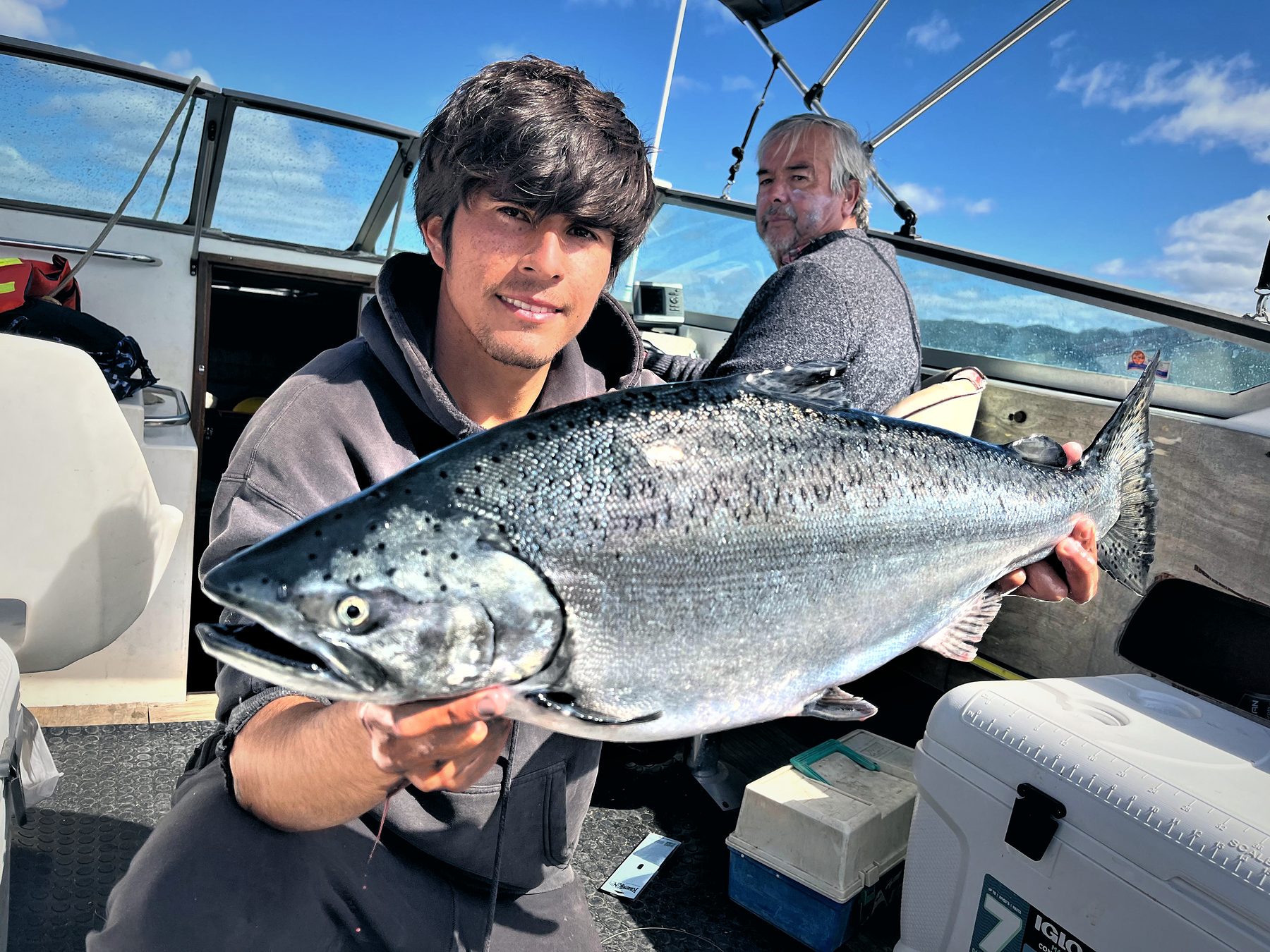
The fish worth catching is the one still coming in from the Pacific, before it enters the river: silver, hard and at full strength. That is why we go out to sea rather than upriver.
It came from North America and is now established from the Biobío southwards. That is why chinook is kept and eaten: there is no conservation reason to release it, unlike trout.
Sernapesca allows three chinook per angler per day with no weight restriction, while coho and Atlantic salmon are capped at three fish or fifteen kilos.
It spawns between March and May and dies. That is why the season closes at the end of March: after that the fish worth chasing is gone.
On this coast its landing as bycatch is already authorised for the local artisanal fleet. It is a big fish, it is there, and you may take it.
The other species
The chinook is the main prize, but not the only one. Queule is La Araucanía's main fishing cove, and on the days the king does not show up, these are the species that carry the session.
Spinning and surface trolling. The most sporting fight of the season. Razor teeth: wire leader.
Bottom and mid-water. The best fish come from near the mouth of the Queule.
One of the cove's main resources. Mid-water fishing when the school moves in.
Estuary and surf, on the flood tide. Ideal for an introductory session.
Bottom fishing over rock. A classic of the local table.
Vertical jigging. Steady action when the surface is quiet.
Tell us which day suits you and we confirm availability. We depart from Avenida Costanera 260, Queule.
Book a trip